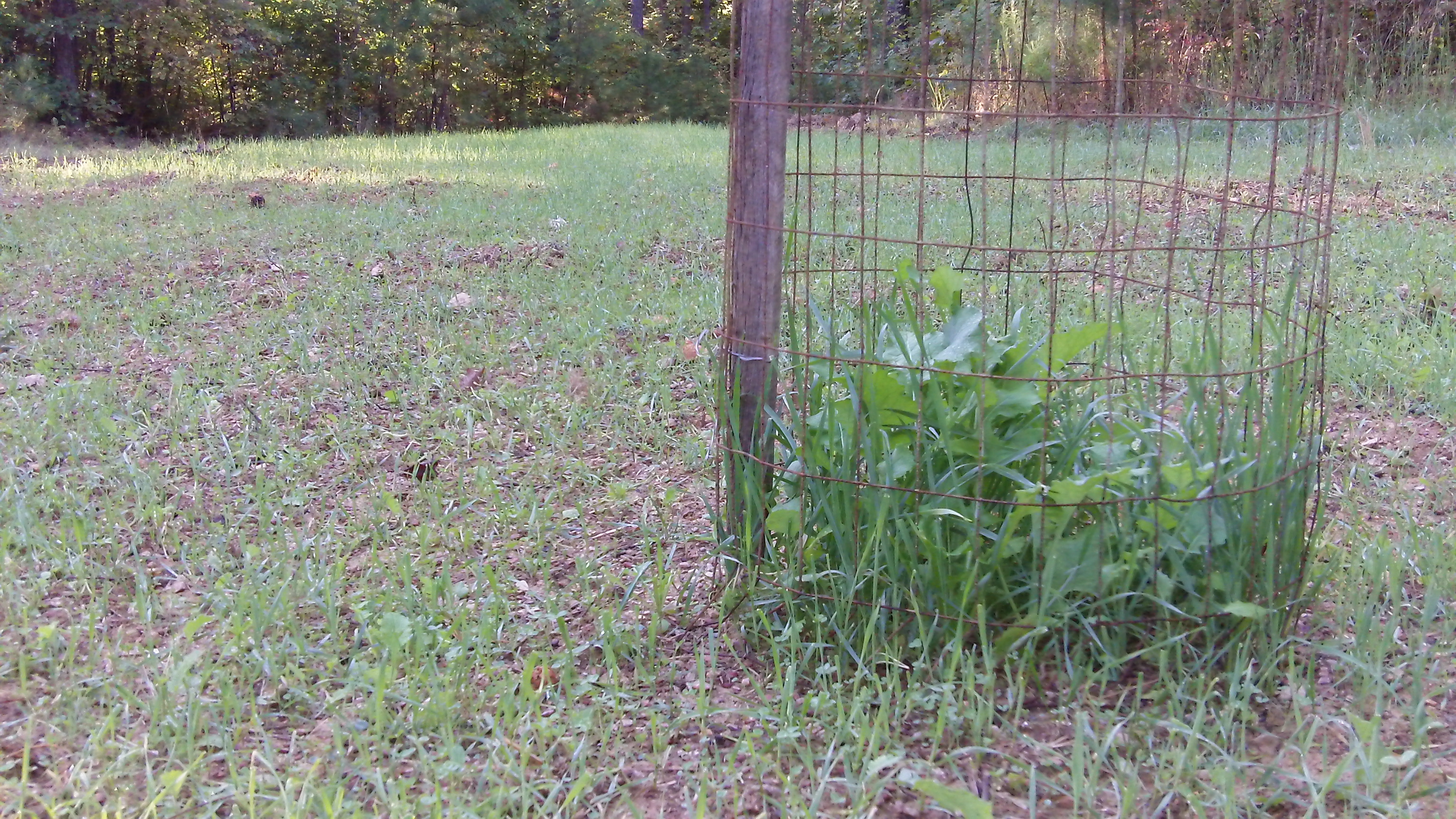
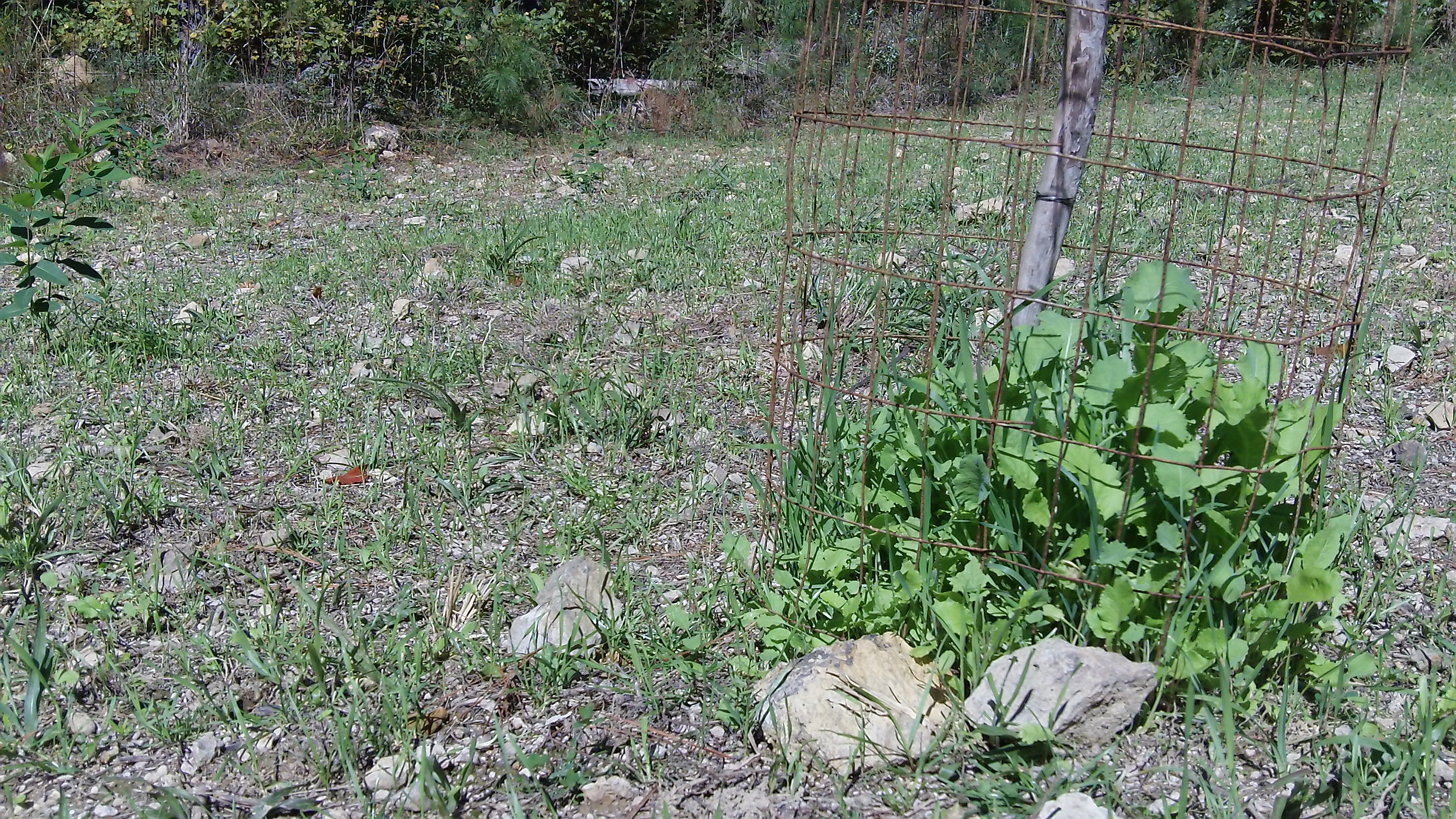
If it weren’t for the excursion zones, I’m not sure I’d have believed it. Seeing our five small food plots look like a field of dirt with a few scraggly green plants, I most likely would have cussed Mother Nature for not allowing all the seeds we sowed to grow this Fall.
Excursion zone shows the amount of browse taking place in one plot.
We have a new lease so we weren’t really sure what to expect once we started prepping and planting the plots. Clearly, the deer in our area are looking for more browse or our plot mix is just that tasty. Then again, it could most certainly be both too.
And the amount of browse at another plot
Curious what others think? Is the over-browsing of the plots a good indicator that we need more food sources in our area? The oak trees in our area are just now starting to drop a larger number of acorns. For our particular lease, there are not many crops within a range area of the deer on our land. The closest thing is a mature hayfield that borders our land. Any mast crops are miles away.
I’m anxious to see what these fields do the remainder of the fall – and whether or not there will be anything left to eat before late season rolls around (the time I really expected these to be “hot” spots).
I recently attended an archery education course sponsored by the National Bowhunter Education Foundation. My motivation for doing so was rooted it it being mandatory for acceptance into the Bowhunter Certification and Referral Service.
It’s great that the Service makes it mandatory, however a majority of the content was definitely second nature for many in the room. After more than 20 years of bowhunting, I’m happy to report I knew most of the curriculum. Most in the room did too. But highlights of attending the free course included a small number of individuals looking to join the bowhunter ranks. I’m a huge proponent of bowhunting so appreciated those hunters taking the leap.
Some of the bowhunter course attendees following a faux blood trail
Another highlight included one of the “teachers” lining up a NC Wildlife Resource Officer to chat with the group. And kudos to area sergeant CN Ingram for spending more than 90 minutes with the participants of the course, answering questions and providing insight into a number of hot topics within the state of NC wildlife.
According to Ingram, one of the biggest current challenges the state encounters is finding volunteers willing to help serve as instructors for the state-sponsored hunter safety and education programs.
That’s a shame.
While the bowhunter course I took was more of a repeat, I do remember many years ago being a young want-to-be hunter taking the overarching hunter safety course. I remember spending much of the course imagining the chance to shoot a 12 ga. shotgun during the range portion of the course. I also remember learning some of the fundamental tools that piqued my curiousity about hunting. It sent me searching to learn more – both via feverish reading of outdoor magazines and through first-hand experimentation in nature’s classroom.
Simply put, that course was a great guidepost for my inquiring mind. And it’s a must for young people looking to learn about the sport. Like most states, in North Carolina the course is needed before a young hunter can legally hunt on their own. To me, the challenge of finding instructors likely increases the ability for youngsters to find places to take the course and could prevent or stunt their desire to become hunters.
For a sport in great peril for recruiting the next generation of hunters, that is not good.
I’ll put my time where my words are here and look into volunteering to become an instructor. So too are a few of my friends. It’s something we all should consider.
— Cat Tales:
– I referenced above, the North Carolina Bowhunters Association’s BCRS program. It’s a great service that relies on archery hunters to help control and conserve deer populations in populated areas. More specifically, according to the group itself, “the primary goal of the BCRS program is to provide a “FREE” service to the public by offering certified bowhunters to assist with deer management programs.”
– I took a little video during the bowhunter course of Jamie, one of the instructors, showing the class how to tie a prusik knot. For anyone who doesn’t know how to tie one, it’s very easy and can help save lives. The knot is among the leading options for hunters as a knot for use with a safety harness in climbing in and out of treestands. Here is a video showing how to do the knot.
– Headed into the event, The Biscuit and I saw a big female red fox cross a driveway in front of us. After looking deeper into her whereabouts, we found a pair of fox pups hanging out in a nearby drainage pipe.
A red fox pup surveys his surroundings from a drainage pipe
Nature sure has its way of doing some remarkable things. Sometimes they’re nothing more than amazing reminders that nature is powerful and cruel.
Photos borrowed from Google Images
As was the case last month when someone near Athens, Ohio (Meigs County) stumbled upon three bucks locked together in a water-filled creek. There are a handful of locked-buck cases that make their rounds on the Internet each year, however this was my first time ever hearing of three.
A quick search on the ol’ world wide web shows that it has happened in the past (one other example was cited in Texas). However, you can go to bed tonight feeling plenty good that your chances of hitting all six numbers on your lucky lotto ticket tomorrow are far greater than finding three mature whitetail bucks with antlers locked together.
There isn’t a whole lot of information out there about how these were actually found, but I can’t imagine what the apparent fella that found them must have thought when he first saw them.
There are unconfirmed, albeit published, reports out there that the bucks are somewhere in the 130, 140 and 170, respectively. That’s a lot of antler to get caught up.
Not sure if you’re like me, but I wonder which was the third buck that “engaged” in this battle and if the first two were already locked beforehand, or his tragic mistake led to the ill-fate of the others.
It seemed only a matter of time before one of my hunting pals said something to me. And so it was walking along a wood line exiting the woods last weekend.
“Be careful unloading that 700,” my buddy ribbed.
“Oh, that’s a bunch of crud,” I said.
The historic Remington Model 700 (Image borrowed from Remington.com)
Remington Arms has come under a good amount of heat the last couple weeks after CNBC aired its “Remington Under Fire: A CNBC Investigation.” The piece, which aired Oct. 20, was promoted with a good bit of anticipation by the cable channel prior to airing, and has seemed to raise a hornet’s nest worth of heartburn and debate ever since. Hosted by Scott Cohn, the show set out to go in-depth into a series of lawsuits alleging that the Model 700 is unsafe and susceptible to firing accidentally.
My family has shot Remington Model 700s long before my baby boots ever set foot on this fine Earth. That heritage held true when I started amassing my own rifle collection several years ago. In fact, nearly every caliber is represented across my immediate family’s rifle repertoire. My father has been a Model 700 Classic fan for decades. And that probably makes me a little bit biased.
Part of our attraction to the rifles is their well-documented tune-ability. You can work with the triggers, easily bed the stocks and drive tacks with the guns out to ridiculously long distances when you combine a few tweaks with the unmatched action that has helped sell more than five million guns over the last quarter century.
I didn’t watch the CNBC piece live. In fact, I somehow missed all the hullabulou leading into the program and found out about it afterwards through several online conversations that circled the outdoor world on Oct. 21. I have since watched it.
I was initially disappointed with the defensive measures taken by Remington to combat the piece, the company seemingly taking a defensive posture that seemed a little juvenile and knee-jerk. However, I was far more pleased with the response provided – and announced through the company’s Twitter feed – earlier today. Feel free to watch the piece here. I do wish this kind of response (which clearly took time to produce) came a little closer to the day of detonation.
The response by Remington makes a lot of sense to me. Especially since I have spent a lot of time handling 700s and even tried to get any kind of failed safety response out of my own rifles. I’ve never seen one fail.
It’s hard to watch the CNBC piece and not feel heartache for what some of the families have gone through. They’re the kind of accidents that you just shake after learning more about. But I think the cases featured on the program are just that – terrible accidents.
"In a civilized world, wild animals exist at all when preserved by sportsmen. The excellent people who protest against hunting and consider sportsmen as enemies of wildlife are ignorant of the fact that in reality the genuine sportsman is, by all odds, the most important factor in keeping wild creatures from total extinction."



 A Hunter's Tales - Hunting Blog